By: Mikala Streeter, Founder of WildOasisLearning.com
The U.S. faces a widening STEMM talent gap. Jobs in science, technology, engineering, mathematics, and medicine are projected to grow at more than twice the pace of the overall labor market—10.4% compared with 4.0%. Yet employers already report shortages in fast-growing areas like artificial intelligence, biotechnology, and renewable energy. The challenge isn’t just about numbers; it’s about equity. Women, Black, Latino, and low-income students remain underrepresented in the very programs and pathways that feed the future workforce.
Most national strategies for closing this “talent gap” focus on large school districts, universities, and broad national initiatives—critical pieces of the solution, and efforts that we support. Alongside these efforts, a powerful and rapidly growing movement is reshaping the educational landscape from the ground up: microschools, homeschooling networks, co-ops, and community-based learning spaces. Far from being fringe experiments, these models can complement existing systems and serve as strong partners in building a more equitable STEMM future.
Microschools: Small, Agile, and Rooted in History
Microschools are intentionally small learning communities – often 5 to 50 students – that emphasize personalized, hands-on, and flexible education. While they gained visibility during the pandemic as “learning pods,” their lineage runs much deeper.
- Community and Freedom Schools: For generations, Black communities have created independent schools (the “shule”) that affirm cultural identity and provide rigorous learning outside segregated or inequitable systems.
- Montessori and Waldorf traditions: These early-20th-century models center child agency, creativity, and holistic learning.
- Unschooling and self-directed education: Grassroots movements emphasize curiosity and learner-driven inquiry.
- Project-Based Learning (PBL): Now familiar in many charters and public schools, PBL roots student learning in authentic, real-world challenges.
Microschools sit at the intersection of these traditions. They are not a fad, but part of a long continuum of community empowerment and educational innovation.
A Growing Movement: Homeschoolers, Microschools & Policy in Motion
The scale is significant, and the story is national:
- Homeschooling Growth:
A 2023 Washington Post analysis estimates that between 1.9 and 2.7 million children are now homeschooled in the U.S., up from about 1.5 million in 2019. Much of this growth comes from Black, Latino, and Asian families seeking culturally responsive, safe, and flexible alternatives.
- Microschool Expansion:
In 2024, microschools served roughly 750,000 students nationwide—about 2% of the K–12 population. Their average size is increasing, with more families turning pandemic pods into long-term schools.
- Policy Shifts:
Vouchers and educational savings accounts (ESAs) in states like Texas and Arizona are fueling new growth, allowing homeschoolers and microschools to access stipends for curriculum, tutoring, or hybrid models. These shifts are legitimizing nontraditional education within public policy.
- Atlanta as a Case Study:
Membership in the Black Microschools of Atlanta network has tripled over the past few years. Families are not just opting out of traditional systems; they are building new ones—with STEMM and curiosity at the center.
- Texas as a Case Study:
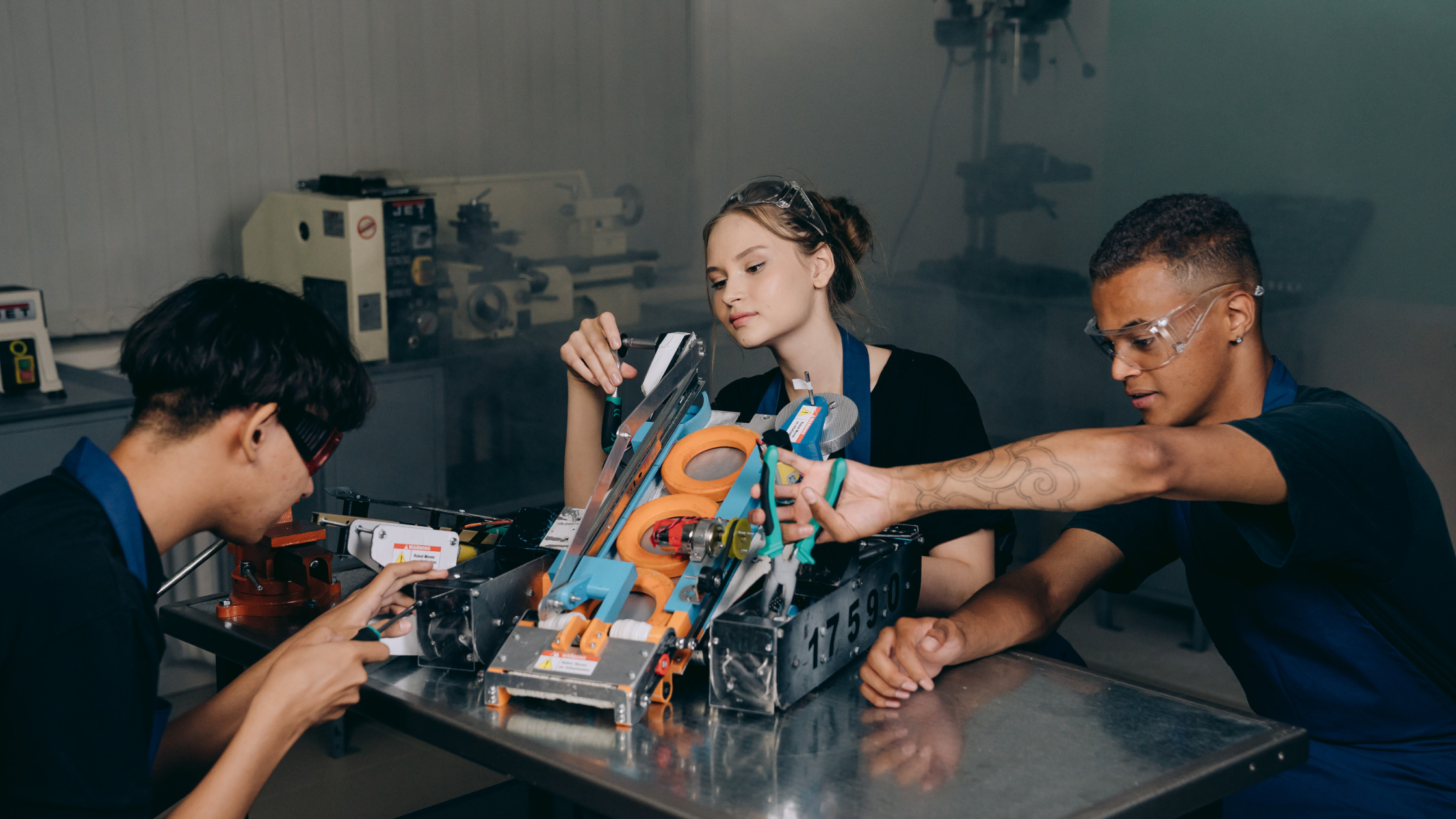
Texas is now home to one of the largest homeschooling populations in the nation, with an estimated 500,000–600,000 children (8–10% of all school-aged students). In Houston, robust homeschool co-ops and microschool networks offer everything from robotics teams to science labs in community centers and church basements.
Across these contexts, families of color are driving much of the growth. Their reasons are consistent: safety, cultural relevance, and the desire for education that affirms their children’s identity while opening doors to opportunity.
Why These Students Are Ideal STEMM Partners
If the goal is to strengthen the STEMM workforce, then these networks of learners and families also deserve serious attention. They bring assets that larger systems often struggle to match:
- Flexible scheduling: Microschools can devote extended blocks to labs, design challenges, or mentorship
- High parent engagement: Families are deeply involved and invested in their children’s learning.
- Cultural responsiveness: Students see their identities and communities reflected, which increases confidence and belonging in STEMM.
- Openness to innovation: Small schools can adopt new tools, from robotics kits to AI, more quickly than large districts
- Student agency: Young people often lead projects, make choices about their learning, and practice real ownership.
- Forward-thinking mindset: These communities are already embracing alternative models, making them natural partners for cutting-edge STEMM initiatives.
A Call to Recognize and Partner
Microschools and community-based networks are not peripheral to the STEMM pipeline—they are central to its future. Policymakers and funders should include them in equity initiatives and grantmaking. Universities and companies should treat them as authentic partners for mentoring and early pipeline development.
If equity is the missing piece in America’s STEMM puzzle, then the rapidly expanding communities of homeschoolers and microschools are already sketching the blueprint. The question is whether the broader system will notice – and invest – before the opportunity slips away.
About the Author:
Mikala Streeter is an educator, curriculum designer, and founder of Wild Oasis Learning, a digital platform that blends project-based, curiosity-driven learning with scalable tools for microschools, homeschoolers, and community-based programs. She previously founded and led The LIFE School, a nationally recognized microschool in Atlanta that she ran for nearly a decade. The school was featured on NPR, at SXSW EDU, and in the Atlanta Journal-Constitution for its innovative approach to student-centered learning. With more than 15 years of experience, Mikala has also written curriculum for organizations including Google, Black Girls Code, and Teach for America. Her work focuses on expanding access and equity in STEMM, helping students and educators reimagine what futures in science and technology can look like.