In the late 2000s, as I completed my doctoral program, I joined a regional initiative aimed at boosting the academic proficiency of Boston Public School students in an underperforming area. This effort, the Boston Campaign for Proficiency, was a coalition of educators and community organizations dedicated to improving academic success and character development among students in low-income neighborhoods.
Years later, I discovered a 2011 Stanford Innovation Review article by John Kanier and Mark Kramer that perfectly described our work in Boston: Collective Impact. They posited that isolated organizational efforts rarely achieve large-scale social change. Using education reform as an example, they write, “heroic efforts of countless teachers, administrators, and nonprofits, together with billions of dollars in charitable contributions, system-wide progress remained elusive” (p. 36).
Their research identified one exception: Strive, a Cincinnati nonprofit. Strive built a broad coalition to improve education across Cincinnati and northern Kentucky. Within four years, Strive partners enhanced student success across 34 of 53 indicators, including high school graduation rates, reading and math scores, and kindergarten readiness for preschoolers.
I was convinced. Not only did I have a name for our Boston initiative, but, more importantly, I had a systematic approach I immediately sought to apply. In 2015, leading diversity engineering societies formed the 50k Coalition, a national, 10-year cross-sector effort to graduate 50,000 BIPOC and women engineers by 2025, a 66% increase. This coalition of universities, engineering associations, and industry representatives achieved its goal by 2020, five years ahead of schedule. Building on this success, Northeastern University launched the Engineering PLUS Alliance in 2021, an NSF-funded coalition of over 117 colleges and universities across the United States working to achieve systems change in engineering education. I have also been involved in smaller efforts, such as the 2022 initiative in which Northeastern convened New York City workforce development organizations to create a cross-sector approach for building a green and blue economy workforce representative of the city’s population.
While these efforts had diverse objectives (and mixed outcomes), they shared five common elements, as identified by Kania and Kramer:
- A Common Agenda:
All participants must share a clear understanding of the problem and a unified vision for change. For the 50k Coalition, beyond our primary goal of annually graduating 50,000 diverse engineers by 2025, we focused on undergraduate student support and retention, as well as community college linkages. As David Peter Stroh states in Systems Thinking for Social Change, “Systems shift not as a result of making many changes, but by sustaining focus on only a few changes over time.”
- Shared Measurement Metrics:
This involves a concise list of indicators used to track success. The Engineering PLUS Alliance agreed to monitor undergraduate and graduate degrees awarded and the number of students impacted by programs developed by our trained change agents.
- Mutually Reinforcing Activities:
Diverse partners collaborate interdependently toward the common agenda. Instead of performing the same tasks, they leverage their individual strengths. In the New York City Workforce Development effort (which unfortunately wasn’t funded), colleges developed degree programs, while community-based organizations and unions offered CTE training and licensure, respectively.
- Continuous Communications:
For large, broad-based initiatives to succeed, building trust, establishing a common vocabulary, and keeping all partners informed are crucial. The Engineering PLUS Alliance held monthly virtual meetings for “Collaborators” and utilized Basecamp for communication and document sharing.
- Backbone Support:
I’ve witnessed collective efforts fail despite having the first four components due to weak or overburdened backbone support. Every successful complex initiative requires a separate organization and staff whose primary purpose is central coordination. The Engineering PLUS Alliance struggled in its first year due to a lack of dedicated backbone support. Prospects significantly improved once we hired a full-time program director and later a program coordinator who facilitated meetings, provided technology support, and handled reporting for the Alliance. This enabled leadership to focus on delivering services to constituents.
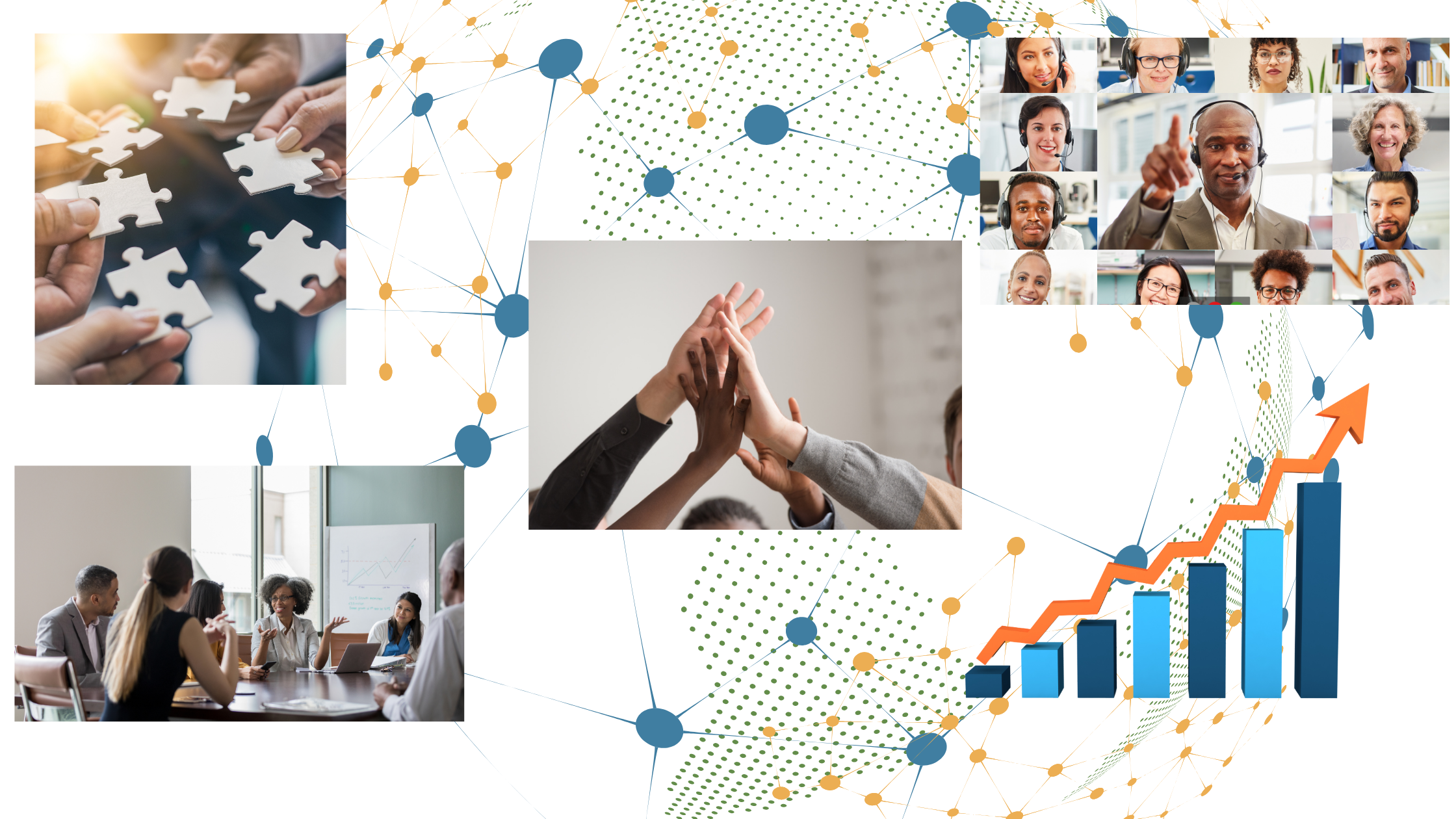
To achieve widespread social change, funders and organizations must resist the urge to champion individual agendas and pursue isolated efforts that compete for the same resources, hoping one or two will emerge and scale. Instead, a systematic approach is essential for social impact. Collective impact, characterized by a dedicated, central infrastructure, a common agenda, shared measurement metrics, continuous communication, and mutually reinforcing activities, significantly increases the likelihood of real change.
About The OASIS Group
The OASIS Group offers consulting services to help organizations scale their ability to prepare and equip students for success in STEMM (science, technology, engineering, math, and medicine). With over 30 years of experience, our client-centered approach brings expertise in program and organizational development, collective impact, and systems change.
Free Resource: The Collective Impact Framework Checklist
Build alignment. Strengthen collaboration. Achieve measurable impact.
Are your partnerships creating real, measurable change?
Our Collective Impact Framework Checklist helps you evaluate how aligned your organization is across key elements, common agenda, shared measurement, communication, and backbone support so that you can turn collaboration into lasting systems change.
➡️ Download the Free Checklist
Use it to assess readiness, identify areas for improvement, and take your next step toward collective impact.