
Across industries and communities, leaders are asking how to prepare learners for a future defined by rapid change, complex challenges, and emerging technologies. And as AI is being embedded in every sector of society, now more than ever, STEM education plays a critical role in that preparation. It strengthens mindsets and capabilities that benefit all students, not only those pursuing technical careers.
For schools, districts, nonprofits, and youth-serving organizations, understanding the broad value of STEM is essential. STEM provides an adaptable foundation that equips learners to thrive in academic spaces, workplace settings, and community environments.
STEM builds future-ready capabilities
STEM is not limited to science or engineering pathways. It nurtures core competencies that decisionmakers consistently identify as essential for college, career, and civic engagement. These include analytical reasoning, problem solving, critical thinking, and effective communication.
Studies show that students who engage deeply with STEM learning often demonstrate significant gains in these areas. In a world where organizations seek adaptable and innovative thinkers, these capabilities directly support long-term success for learners and the systems that serve them.
Engagement-driven learning that supports diverse learners
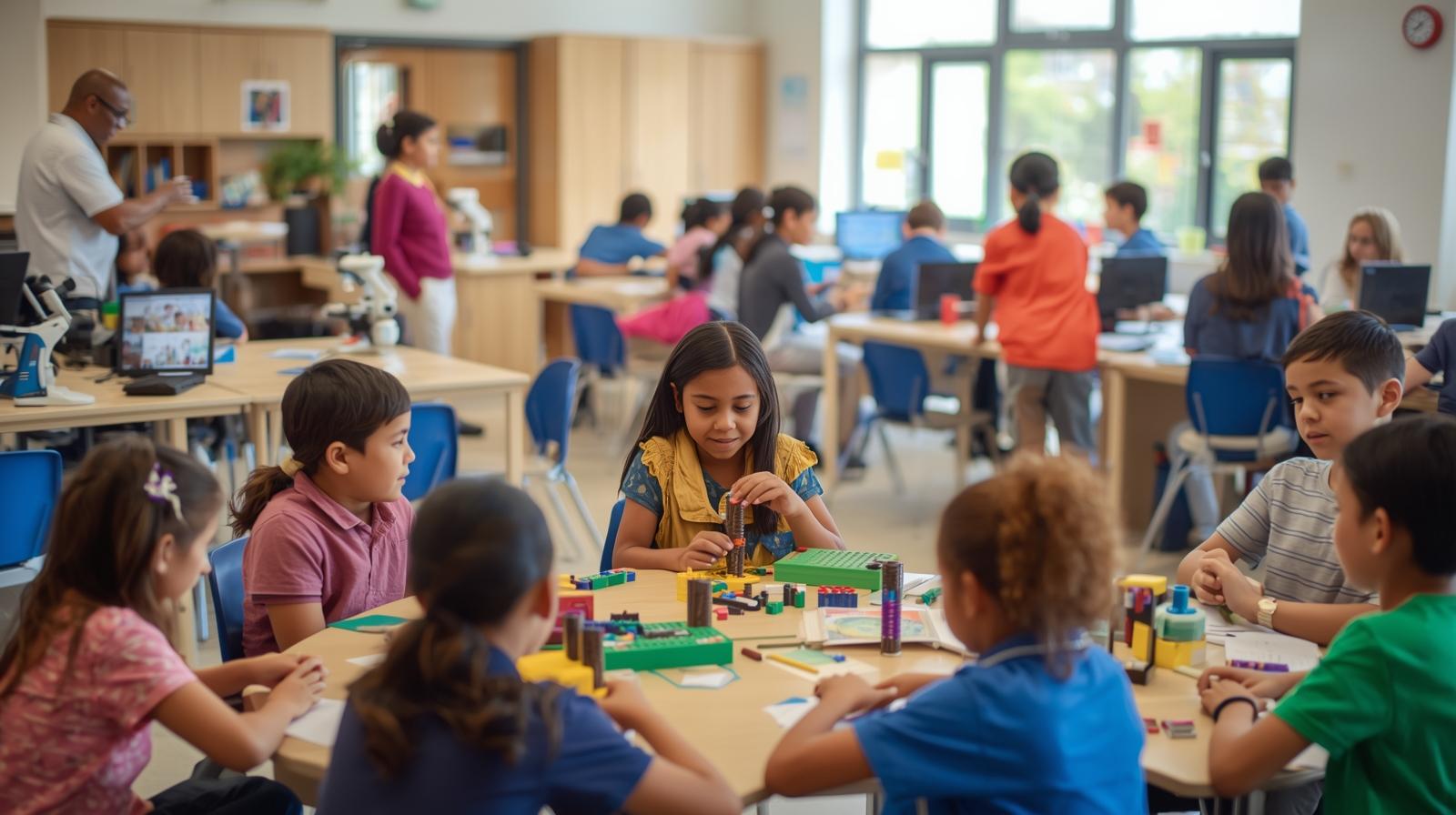
STEM learning embraces an experiential approach most recently introduced by Kolb’s Experiential Learning Theory. Instead of beginning with theory, students start by exploring real problems, testing ideas, and reflecting on outcomes. This creates stronger engagement and deeper understanding.
For instance, educators like Bob Moses, founder of The Algebra Project, demonstrated how math comes alive when connected to lived experiences. Youth programs have also shown that hands-on projects, skits, demonstrations, and collaborative problem solving help students internalize concepts more meaningfully than traditional lecture-based instruction.
Northeastern University, a leader in experiential learning, has applied these principles even to their novel PhD and law school programs.
For schools and nonprofits, this model supports a wider range of learners, including those who may not connect with conventional teaching strategies. It fosters curiosity, confidence, and a sense of belonging in academic spaces.
A platform for workforce and community development
STEM prepares learners to navigate a world where industries shift quickly and new roles emerge each year. The goal is not to turn every student into an engineer. The goal is to help all students develop the mindset and adaptability required in the modern workforce.
STEM-aligned learning strengthens:
- • Comfort with uncertainty
- • Collaboration within diverse teams
- • Creative problem solving
- • Application of knowledge to real challenges
- • Persistence and resilience
These competencies support economic mobility, community leadership, and long-term organizational impact. For nonprofits and education partners, STEM investments directly contribute to more equitable opportunities and stronger outcomes.
STEM is not an isolated discipline. It is a catalyst that empowers learners to question, explore, and innovate. For decision makers who shape educational and community programs, investing in STEM is a strategic commitment to future readiness, social impact, and equity. When we make STEM accessible to all learners, we build pathways that strengthen communities and expand opportunities for generations to come.