The Challenge of STEMM Talent Shortage
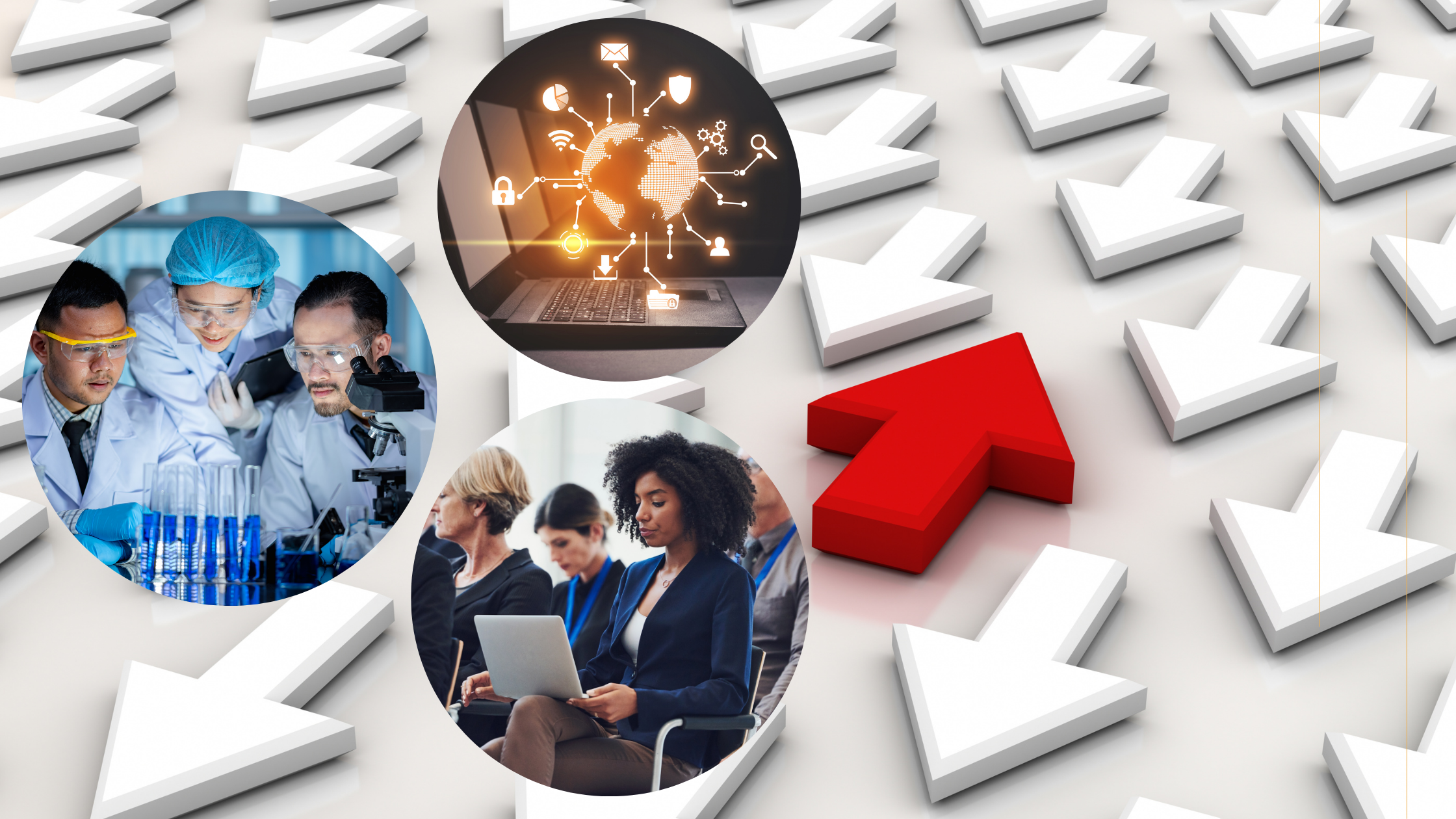
The United States is currently experiencing a significant shortage of professionals trained in science, technology, engineering, mathematics, and medicine (STEMM), as I have previously written. Rapid advancements in AI, automation, quantum computing, biotechnology, and the growing need for sustainable energy have intensified demand for STEM jobs, which is expected to grow nearly three times faster than other fields in the coming decade. However, the supply of qualified workers is failing to keep pace—by the end of 2025, about 3.5 million STEM positions will need to be filled, yet up to 2 million may remain vacant due to the skills gap. This shortfall has profound implications for both the economy and national security.
Efforts to Address the Talent Gap
Over the years, strategies have focused on identifying, motivating, and supporting students from diverse backgrounds to pursue STEMM careers. Programs like the MIT Introduction to Engineering and Science (MITES), which has been running for fifty years (and which I’ve had the privilege of directing two decades ago), and more recent initiatives such as Code for Life in East Harlem and the Bronx, have successfully helped hundreds of students from underserved communities excel in STEMM.
Yet, despite these efforts, the talent gap persists.
This ongoing issue raises the question: Why are so few students entering STEM fields? According to data from the National Center for Educational Statistics, out of 4 million students who began high school in 2001, only 166,000 earned a STEM degree by 2011—a mere 4 percent of all ninth graders.
The Upstream Approach
Dan Heath’s book, “Upstream: The Quest to Solve Problems Before They Happen,” begins with a parable about two people repeatedly saving drowning children from a river until one decides to go upstream and stop the cause. In the context of STEMM, a similar “upstream” strategy is needed: tackling the root causes behind the shortage of STEMM talent.
A robust, systemic approach is required—one that addresses structural and cultural barriers preventing students from pursuing these rewarding careers. This approach can be summarized by focusing on the “5 A’s”:
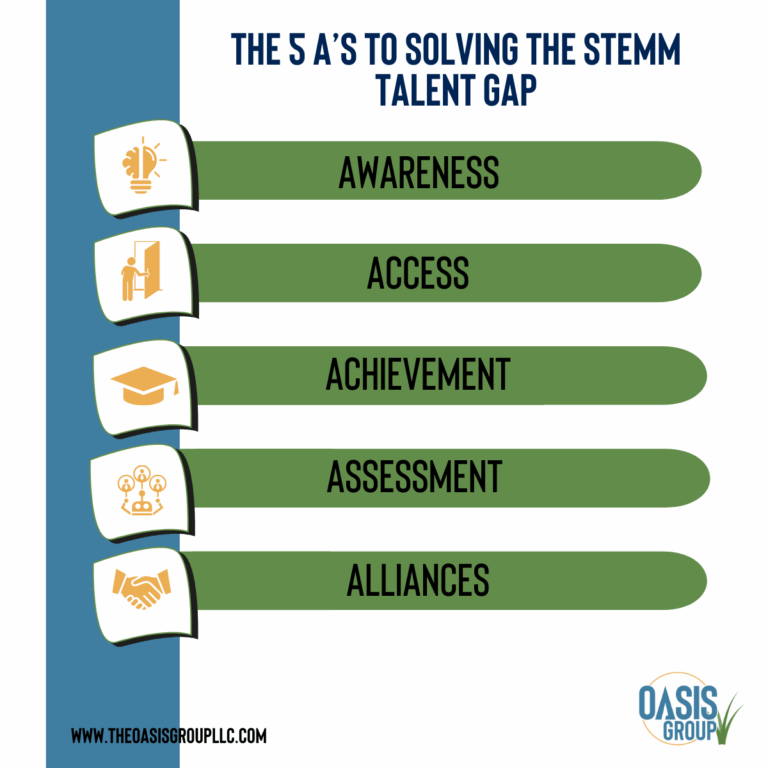
Awareness
Young people need increased exposure to careers in science and technology, particularly in emerging fields like AI, biotechnology, and quantum computing. Leveraging social media can raise awareness—just as traditional media did for previous generations—making these careers visible and appealing.
Access
High-quality STEMM education is often restricted by race and income, a legacy from our nation’s founding. However, new AI-powered tools offer potential for personalized learning tailored to each student’s interests and pace. The OASIS Group’s own Mikala Streeter has been training educators to use emerging technologies to enhance learning outcomes.
Achievement
Math proficiency is essential for success in STEMM. Alarmingly, in 2024, only 39% of fourth graders and 28% of eighth graders achieved proficiency in math, both figures lower than pre-pandemic 2019 levels.3 These results vary by state, highlighting the need for higher standards, modern teaching techniques, and innovative educational technology.
Assessment
Hundreds of programs aim to prepare students for STEMM, but few know what truly works. During my leadership at a national engineering society, a study revealed that, among many activities, only study halls and study skills workshops directly improved GPAs. Programs should conduct similar assessments to determine what is most effective—scaling up successful initiatives and discontinuing those that yield less impact.
Alliances
Many schools, colleges, and nonprofits operate in isolation, competing for similar resources and students. However, organizations like the 50k Coalition—founded in 2015 to unite engineering diversity groups—demonstrate that collaborating around shared goals can drive significant change. This coalition met its milestone of graduating 50,000 BIPOC and women engineers annually five years early.
By going upstream—raising awareness, improving access, assessing impact, and building alliances—we can develop a holistic, systems-based solution that empowers more students to achieve their potential in STEMM. This vision is at the core of The OASIS Group’s mission.
References:
1 U.S. Bureau of Labor Statistics – Bureau of Labor Statistics, updated April 18, 2025
2 https://www.codewizardshq.com/stem-statistics/#:~:text=The%20U.S.%20will%20need%20to,%2446%2C680%20for%20non%2DSTEM%20jobs